
Home / Trailers
ORIHIVSILMASH / Design concept
Trailers
Confirm the current configuration, compatibility, price and delivery terms with the manufacturer.
Manufacturer’s materials
Product benefits
These benefits describe the machinery category. Confirm the specifications, equipment and suitability of a particular model with the manufacturer.
Tractor trailers: features, types and advantages
A tractor trailer is designed to transport loads over short and medium distances. The use of tractor trailers in road maintenance, housing and municipal services, private farms and enterprises is naturally growing.
The term tractor trailers should also include tractor trains and self-propelled chassis.
Classification and brief description
Tractor trailers are divided into two main types:
- general-purpose;
- special-purpose.
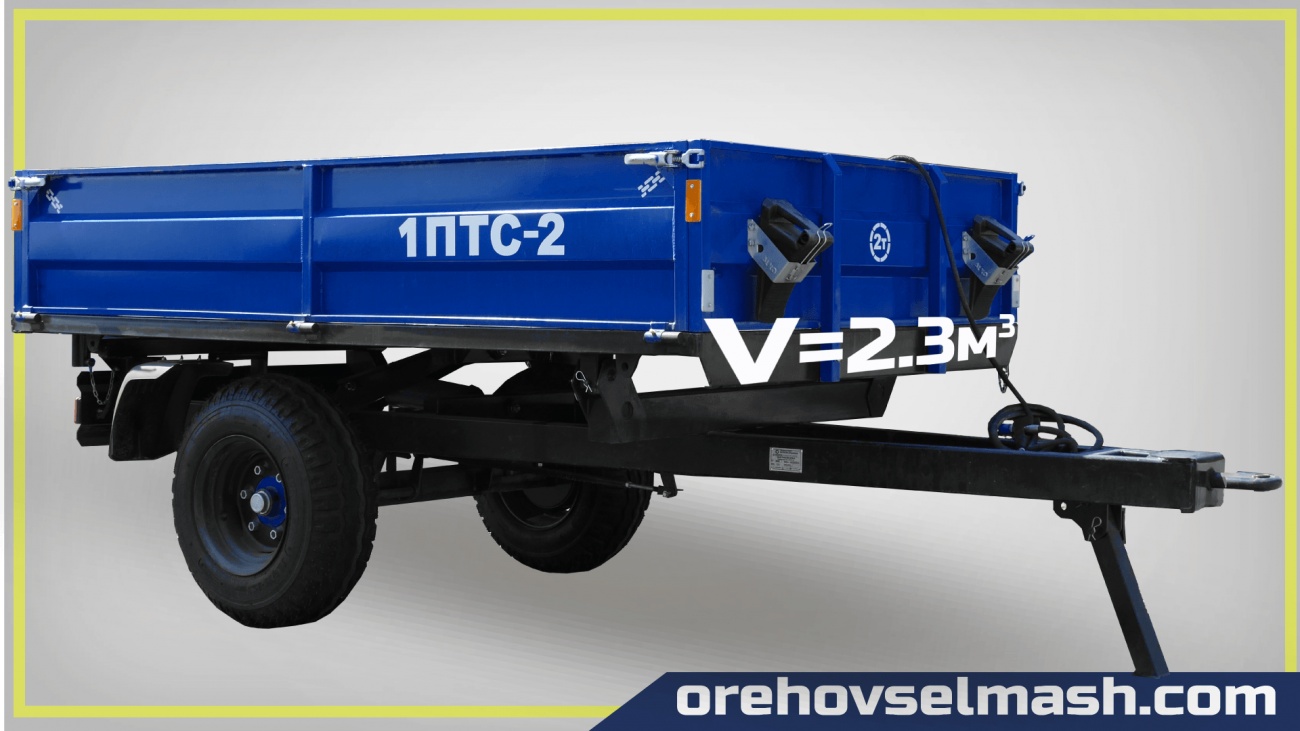
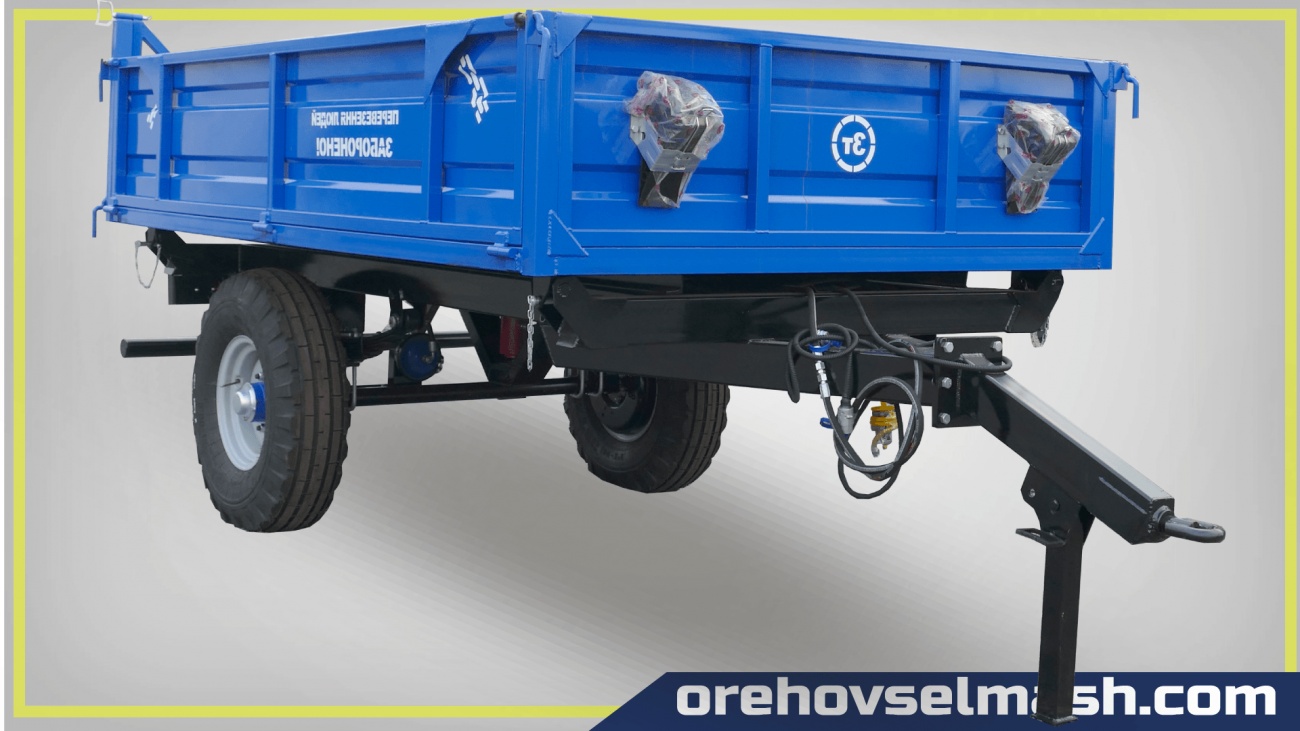
A general-purpose tractor trailer is a freight trailer equipped with a tipping or drop-side platform. Each category is further divided by the number of axles. Two-axle designs are the most widespread. Three-axle trailers are less in demand and are rarely encountered.
The load capacity of general-purpose trailers ranges from 2 to 30 t. Body volume depends on the length of the platform and the height of the sides.
General-purpose trailers are intended to carry loose and dry bulk loads, building materials, fodder and other goods. They are most widespread in rural areas. Tractors of classes 0.6–5.0 serve as towing vehicles for tractor trailers.
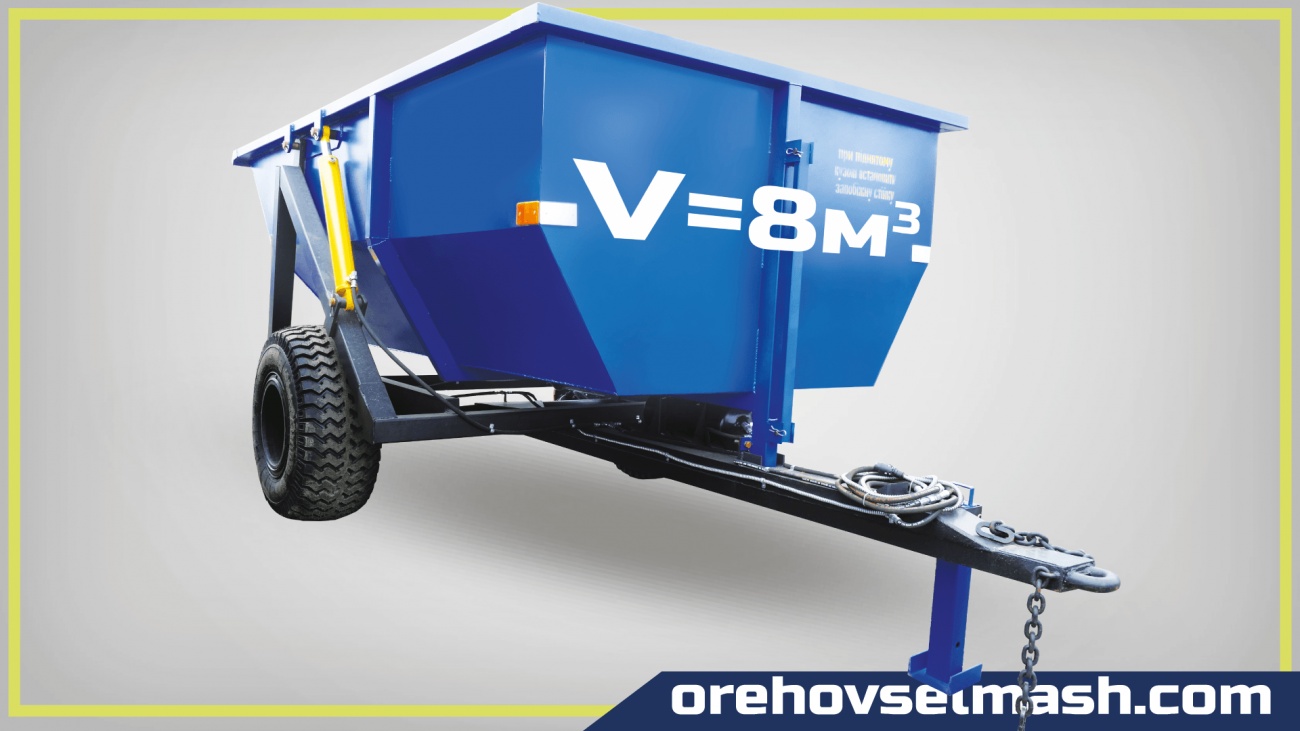
Special-purpose trailers carry specific types of loads. They include:
- spreaders for all types of fertilizers;
- trailed feed dispensers;
- trailed tanks for transporting liquids;
- sewage disposal equipment;
- road treatment chemical spreaders;
- low-loader trailers;
- livestock trailers.
Special-purpose trailers differ from general-purpose trailers by requiring less labor to carry out their work. They are often not involved in the daily work process but are used for a specific purpose. However, this specialization makes the equipment’s design more complex and consequently increases its cost. You can buy this type of tractor trailer on our website.
A tractor trailer consists of two main components: the chassis and the platform. A wide variety of platforms can be installed, depending on the vehicle’s overall purpose. The main chassis components are the frame, axle, braking systems, electrical and hydraulic equipment, support and safety stand.
Tractor trailers are divided into three groups according to their design features:
- trailers in which the load is distributed evenly across the entire axle assembly;
- semi-trailers in which the load is distributed between the tow hitch and the rear axle;
- semi-mounted trailers in which the load is distributed between the tow hitch and the axle assembly.
A tractor trailer’s platform is generally longer than that of a semi-trailer.
All trailers work in tandem with combine harvesters, loaders, cranes and other loading equipment. Their design does not provide a self-unloading/loading function, regardless of their intended purpose.
Semi-trailers are more maneuverable, which is particularly noticeable when reversing. They are technically simpler and have a structural weight that is 20–30% lower; in difficult road conditions, they offer greater operational reliability. Tractors of classes 0.6–1.4 serve as towing vehicles for semi-trailers.
Only a tractor trailer is equipped with a turning mechanism. It is easier to maintain, and its stronger construction makes it more reliable. Its main disadvantage can be considered instability on sharp turns due to the high side superstructure. Careful driving easily offsets this disadvantage. Furthermore, a tractor trailer with steering knuckles offers increased stability on slopes, making it indispensable where there are changes in elevation.
The main direction of development
Tractor trailers were originally developed as tractor trains. The desire to make the fullest possible use of tractors’ tractive capabilities led to the invention of semi-trailers, followed by semi-mounted trailers. Today, an increasing number of enterprises that install bodies for various purposes on tractor bases are creating self-propelled chassis, including those designed to work with permanently installed and interchangeable bodies adapted to transport general and special-purpose loads.
The development of tractor trailers is accompanied by improvements to auxiliary trailed equipment. The constant drive to improve productivity and work quality creates a need to replace general-purpose equipment with specialized equipment on an increasingly wide scale. Modern tractors can be coupled with all types of tractor trailers currently produced. They remain highly applicable in virtually every area of human work, despite the growing use of self-propelled tractor chassis with interchangeable bodies.
Information for the buyer
Before buying a tractor trailer anywhere, you should familiarize yourself with the products manufactured by our company. You can find them in the Trailers section of our website. Our tractor trailer model range is presented for your consideration. The information on the website is far from complete. To obtain a more accurate understanding of our products, contact our managers. All contact information is in the Contacts section. You can buy tractor trailers at the best price from our company by submitting an inquiry on the website, and we guarantee that we will be able to meet your needs.